.png)
.svg)
At its core, biophilic design is about weaving elements of the natural world into the built environment. But we’re not talking about a few houseplants or a pretty backyard view.
Biophilic design is intentional. It uses natural materials, layered lighting, organic patterns, and architectural flow to create spaces that feel rooted—spaces that breathe.
In luxury homes, this shows up in subtle but powerful ways:
The goal? To create a home that supports your nervous system as much as your aesthetic sense.
The desire for calm, connection, and sanctuary has only grown in recent years. After spending more time indoors, many of us realized our homes needed to do more than impress—they needed to restore.
Mid-Peninsula homeowners, especially, are seeking that balance. High-performing clients often work in fast-paced, tech-driven roles. They want homes that slow things down—without compromising on sophistication or style.
Biophilic design is the quiet answer to overstimulation. And done well, it doesn’t look “green” or “natural” in an obvious way. It just feels good.
Not every region can support this kind of design philosophy. But the Mid-Peninsula? It was practically made for it.
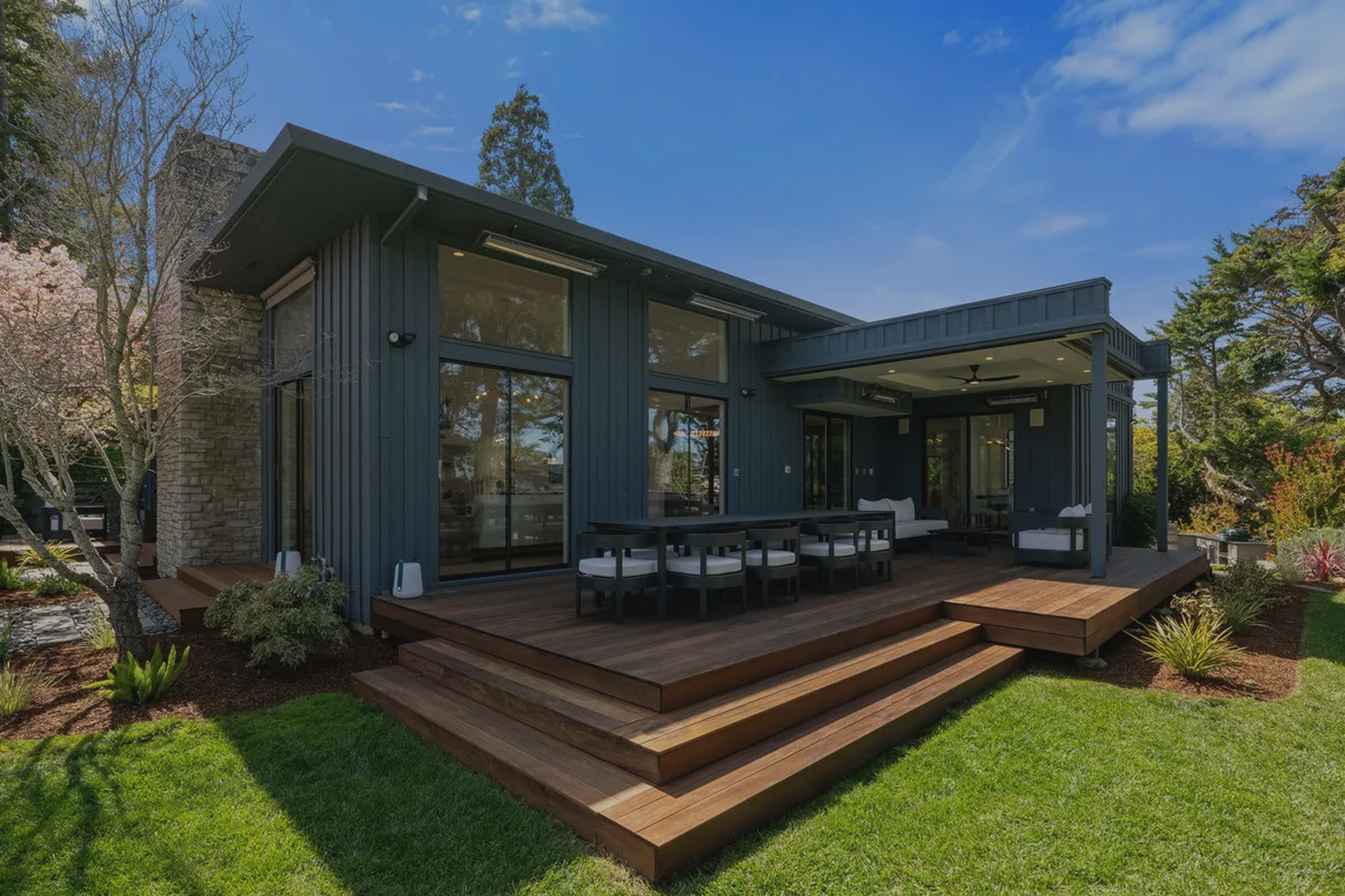
With our mild climate, generous sunlight, and rich natural surroundings—from redwoods to rolling hills—we have the perfect canvas. Homes here can blur the line between inside and out almost year-round. Courtyards, atriums, and indoor-outdoor lounges aren’t just possible—they’re practical.
We’ve worked on homes where entire living areas open up to the garden. Where a mature Redwood tree becomes part of the architecture. Where afternoon light dapples across walls like water. It’s not about “bringing the outside in” as a design catchphrase. It’s about dissolving the boundary entirely.
The most successful homes don’t just photograph well—they live well. They feel calming without being cold, organic without being rustic, elevated without being overdesigned.
When we incorporate biophilic principles, it’s not about copying nature—it’s about collaborating with it. Working with the site. Respecting the light. Choosing materials that age with grace.
And above all, it’s about designing a home that gives something back to the people who live in it.
Luxury, to us, isn’t louder. It’s smarter. And biophilic design is a beautiful reminder that sometimes, the most luxurious thing you can feel at home… is peace.
In today’s always-on world, homeowners aren’t just craving comfort—they’re craving calm. Biophilic design responds to that need by creating a stronger connection between the home and the natural environment.
For many Mid-Peninsula homeowners, it’s not about following a trend. It’s about designing a home that supports well-being, focus, and a sense of ease—every single day.